Asteroid Tracker

Impact Probability

What are the chances of an
asteroid hitting Earth?

The question has a real, calculable answer - and it varies by many orders of magnitude depending on the size of object you are asking about. Small impacts happen constantly. Large ones are extraordinarily rare.

Is any specific asteroid a threat right now? →

Probability by object size

Impact probability and size are directly linked. Smaller objects are more numerous and strike more frequently. Larger ones are rarer - both because they are fewer in number and because they take longer orbital paths that cross Earth's orbit less often.

The figures below are statistical averages. They describe the expected frequency across many thousands of years - not predictions for any specific year or decade. A "once in 500 years" event could happen tomorrow or could not happen for 2,000 years.

Diameter Annual probability
< 25 m High
25–50 m ~1 in 200 per year
50–140 m ~1 in 1,000 per year
140 m – 1 km ~1 in 5,000–30,000 per year
1–5 km ~1 in 200,000 per year
> 5 km ~1 in 50,000,000 per year

How scientists calculate the odds

For a specific asteroid, impact probability is calculated from orbital uncertainty. When a new object is discovered, a handful of observations fix its position to within a small error margin. Orbital mechanics software fits a range of possible trajectories to those observations - not a single line but a cloud of possible paths.

That cloud is propagated forward in time. If any paths in the cloud pass through Earth at a future date, the fraction that do becomes the initial impact probability. With more observations, the cloud narrows. In almost every case, the narrowed cloud no longer includes Earth, and the probability drops to zero.

For statistical (background) estimates - how often objects of a given size hit Earth in general - scientists count impact craters, analyse the size distribution of known asteroids, and combine that with orbital dynamics models to estimate how often a given size class crosses Earth's path.

Putting the numbers in context

The annual probability of a Tunguska-scale event - roughly 1 in 500 to 1 in 1,000 - is often cited as a reason to take planetary defence seriously. The same probability applied to a large earthquake or pandemic would generate significant policy attention.

The difference is that asteroid impacts are, in principle, preventable. Given sufficient warning - typically decades - a kinetic impactor spacecraft can shift an asteroid's trajectory enough to miss Earth entirely. The DART mission in 2022 demonstrated this works in practice, not just in theory.

The most practically useful thing that reduces impact risk is investment in survey telescopes. Finding objects early provides the warning time that makes deflection possible. NASA estimates it has found over 95% of all near-Earth objects larger than 1 kilometre. The remaining catalogue work focuses on objects in the 140 metre to 1 kilometre range.

Related pages

Common questions

What are the odds of an asteroid hitting Earth?
The odds depend entirely on the size of object you are asking about. Small objects - under 25 metres - enter the atmosphere regularly, but almost all burn up before reaching the ground. For a Tunguska-scale event (50-80 metres, causing regional devastation), the annual probability is roughly 1 in 500 to 1 in 1,000 in any given year. For a globally catastrophic impact from a kilometre-scale object, the probability is around 1 in 700,000 per year. These are actuarial averages across many centuries, not predictions for any specific year.
How do scientists calculate asteroid impact probability?
Orbital mechanics software at NASA's Center for Near Earth Object Studies (CNEOS) takes the asteroid's observed positions and fits a range of possible orbits consistent with those observations. It then propagates each possible orbit forward in time. If any of those trajectories intersect Earth within a defined uncertainty zone, the fraction of trajectories that hit becomes the impact probability. As more observations reduce orbital uncertainty, the probability either converges toward 0 (no impact) or toward 1 (confirmed impact). In practice, it almost always converges toward 0.
How often do asteroids actually hit Earth?
Small objects hit Earth constantly - several tonnes of space dust and pebble-sized meteoroids enter the atmosphere every day. Objects large enough to produce a visible fireball arrive roughly several times per year globally. Car-sized objects that produce a significant airburst (like Chelyabinsk) occur perhaps once every few decades. Tunguska-scale events (50-80 metres) happen on average every few hundred years. Objects 140 metres or larger - the threshold for a potentially hazardous asteroid - strike perhaps once every few thousand years.
Has NASA identified any current impact threats?
No. NASA's Sentry impact risk table tracks all near-Earth objects with a non-zero calculated impact probability. As of 2026, all entries on the table have Palermo Scale values well below -2, meaning they are far less likely to impact than the statistical background rate for objects of their size. None carry a Torino Scale rating above 0. The table is updated automatically when new observations refine an orbit.
What is the probability of a Chicxulub-scale impact?
The Chicxulub impactor that caused the Cretaceous-Paleogene extinction event 66 million years ago was estimated at 10-15 kilometres across. Objects of that size hit Earth roughly once every 100 million years on average - an annual probability of around 1 in 100,000,000. NASA estimates it has catalogued more than 95% of all near-Earth objects 1 kilometre or larger. None are on an impact trajectory. The chance of an undetected Chicxulub-scale object arriving in the near future is effectively negligible.
Sean Barraclough

Sean Barraclough

Creator of closeapproach.space

Recommended stargazing gear

Full guide →

This section contains affiliate links. As an Amazon Associate I earn from qualifying purchases.

Celestron 21023 Cometron 76mm Firstscope
Telescope

Celestron 21023 Cometron 76mm Firstscope

View on Amazon
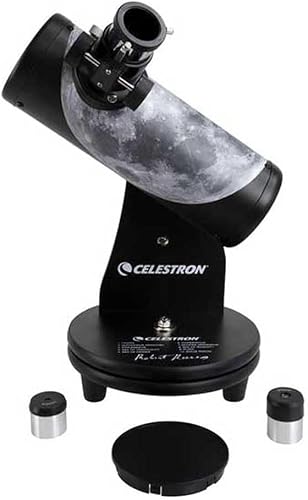
Celestron 22016 Firstscope Robert Reeves Signature Edition 76mm Dobsonian
Telescope

Celestron 22016 Firstscope Robert Reeves Signature Edition 76mm Dobsonian

View on Amazon
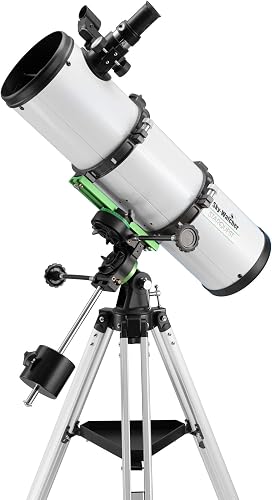
SkyWatcher StarQuest-130P 130mm f/5 Parabolic Newtonian Reflector
Telescope

SkyWatcher StarQuest-130P 130mm f/5 Parabolic Newtonian Reflector

View on Amazon
Celestron UpClose G2 10×50 Porro Binoculars
Binoculars

Celestron UpClose G2 10×50 Porro Binoculars

View on Amazon
Celestron SkyMaster 15×70mm Porro Prism Binoculars
Binoculars

Celestron SkyMaster 15×70mm Porro Prism Binoculars

View on Amazon
Turn Left at Orion
Book

Turn Left at Orion

View on Amazon
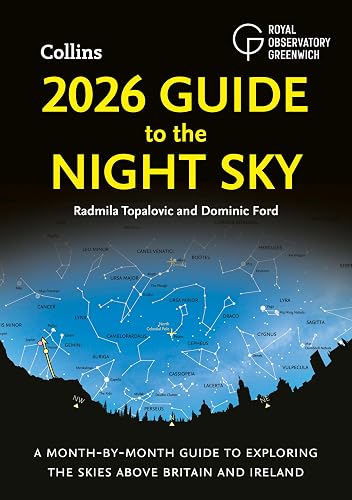
2026 Guide to the Night Sky: Britain and Ireland
Book

2026 Guide to the Night Sky: Britain and Ireland

View on Amazon
Astrophysics for People in a Hurry
Book

Astrophysics for People in a Hurry

View on Amazon
Philip's Planisphere Latitude 51.5 North
Planisphere

Philip's Planisphere Latitude 51.5 North

View on Amazon