Asteroid Tracker

Historical Record

Notable asteroid
close approaches

Some asteroid passes have set proximity records. Others reached the atmosphere and made themselves known without warning. This page covers both - the closest confirmed flybys and the atmospheric events that shaped how planetary defence is funded and prioritised.

Apophis - the 2029 flyby →

Closest confirmed flybys

Non-impacting passes sorted by miss distance from Earth's surface. Distances from Earth's centre are roughly 6,371 km greater.

Date Object Miss (surface)
13 Nov 2020 2020 VT4 ~370 km
26 Jan 2023 2023 BU ~3,600 km
28 Jun 2011 2011 MD ~12,000 km
18 Mar 2004 2004 FH ~43,000 km
13 Apr 2029 Apophis 2029 ~31,000 km

The Apophis 2029 encounter

On 13 April 2029, Apophis - a 370-metre asteroid - will pass roughly 31,000 km above Earth's surface. That places it below the ring of geostationary communication satellites at 35,786 km. No known asteroid of similar size has passed this close in the era of systematic tracking.

The flyby carries no impact risk. What makes it significant is what it enables: the closest ever observation of a large near-Earth asteroid from Earth, combined with planned spacecraft visits from multiple agencies. The encounter will also test orbital prediction models at very short range, where gravitational effects are most pronounced.

When asteroids reached the atmosphere

Not all notable events were safe flybys. These objects entered the atmosphere - some never reaching the ground intact, one predicted to the minute before arrival.

Date Event
15 Feb 2013 Chelyabinsk object
2 Oct 2008 2008 TC3
30 Jun 1908 Tunguska object

Why the proximity record keeps improving

The confirmed close-approach record has been broken multiple times in the past decade. That is not because asteroids are getting closer - it is because survey telescopes are getting better. ATLAS, Pan-STARRS, and Catalina Sky Survey now detect objects a fraction of the size that earlier systems could see.

Small asteroids are common and many pass at short range. Most go undetected because they are too faint until they are very close. Post-flyby detections - where an object is found in archival imagery after its closest pass - are likely to continue adding entries to the record table.

The Chelyabinsk event in 2013 was a reminder that the most dangerous sub-threshold objects arrive without warning. That event directly accelerated investment in short-warning survey infrastructure, particularly ATLAS, which is specifically designed for rapid detection of objects in the final hours or days before a potential encounter.

Related pages

Common questions

What is the closest confirmed asteroid flyby on record?
Asteroid 2020 VT4 passed approximately 370 km above Earth's surface on 13 November 2020 - closer than the International Space Station's orbital altitude. The object was roughly 5 metres across and was discovered only after the flyby. Asteroid 2023 BU holds the record for the closest pass detected before it happened, at around 3,600 km above the surface on 26 January 2023.
How close will Apophis come to Earth in 2029?
On 13 April 2029, asteroid 99942 Apophis will pass approximately 31,000 km above Earth's surface - closer than the ring of geostationary satellites at 35,786 km altitude. Apophis is roughly 370 metres across, making it the largest asteroid to pass this close to Earth in recorded history. It will be visible to the naked eye over Europe, Africa, and Asia during the flyby.
What happened at Chelyabinsk in 2013?
On 15 February 2013, an asteroid roughly 20 metres across entered the atmosphere over Chelyabinsk, Russia at around 67,000 km/h. It exploded at approximately 30 km altitude in an airburst releasing energy estimated at 500 kilotons of TNT. The shockwave broke windows across a wide area and sent roughly 1,500 people to hospital with cuts from flying glass. The object was not detected beforehand - it arrived from the direction of the Sun.
What was the Tunguska event?
On 30 June 1908, a rocky object estimated at 50-80 metres across entered the atmosphere over the Podkamennaya Tunguska River in Siberia. It exploded at around 8-10 km altitude, releasing energy estimated at 10-15 megatons of TNT and flattening approximately 2,000 km² of forest. The object disintegrated before reaching the ground, so no crater formed. Due to the remote location, no human deaths were confirmed from the impact itself.
Why are some very close asteroid passes discovered only after the flyby?
Small asteroids - under about 10 metres - reflect little light and are difficult to detect with current survey telescopes until they are very close. Some pass quickly enough that even a few days of lead time is not available. Objects arriving from the direction of the Sun are especially hard to spot, as ground-based telescopes cannot point toward the Sun. Short-warning survey networks like ATLAS are designed specifically to catch these late detections.
Sean Barraclough

Sean Barraclough

Creator of closeapproach.space

Recommended stargazing gear

Full guide →

This section contains affiliate links. As an Amazon Associate I earn from qualifying purchases.

Celestron 21023 Cometron 76mm Firstscope
Telescope

Celestron 21023 Cometron 76mm Firstscope

View on Amazon
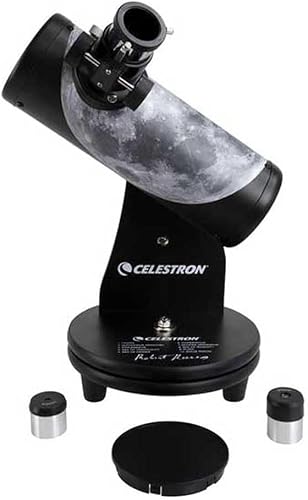
Celestron 22016 Firstscope Robert Reeves Signature Edition 76mm Dobsonian
Telescope

Celestron 22016 Firstscope Robert Reeves Signature Edition 76mm Dobsonian

View on Amazon
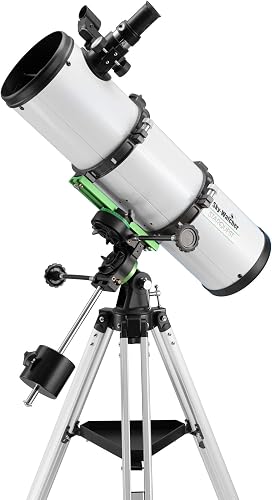
SkyWatcher StarQuest-130P 130mm f/5 Parabolic Newtonian Reflector
Telescope

SkyWatcher StarQuest-130P 130mm f/5 Parabolic Newtonian Reflector

View on Amazon
Celestron UpClose G2 10×50 Porro Binoculars
Binoculars

Celestron UpClose G2 10×50 Porro Binoculars

View on Amazon
Celestron SkyMaster 15×70mm Porro Prism Binoculars
Binoculars

Celestron SkyMaster 15×70mm Porro Prism Binoculars

View on Amazon
Turn Left at Orion
Book

Turn Left at Orion

View on Amazon
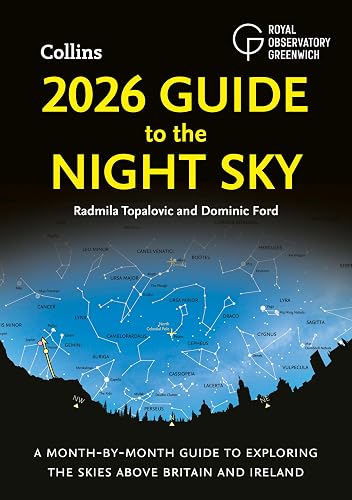
2026 Guide to the Night Sky: Britain and Ireland
Book

2026 Guide to the Night Sky: Britain and Ireland

View on Amazon
Astrophysics for People in a Hurry
Book

Astrophysics for People in a Hurry

View on Amazon
Philip's Planisphere Latitude 51.5 North
Planisphere

Philip's Planisphere Latitude 51.5 North

View on Amazon