Asteroid Tracker

Live NASA Data

Asteroids passing Earth
in 2026

NASA monitors hundreds of asteroid close approaches each year. The table below shows all upcoming approaches drawn from NASA's Near Earth Object Web Service (NeoWs), refreshed every 30 minutes.

Upcoming approaches - 2026

All recorded close approaches in the coming weeks, sorted by date. Click any row to view full details.

Range:
Sort:
Unit:
Name Date Est. Diameter Miss Distance(LD) Velocity Hazard

What you're seeing

Each row represents one asteroid whose orbit brings it within roughly 7.5 million kilometres of Earth's path around the Sun. That threshold - 0.05 AU, where one AU (astronomical unit) equals 150 million km - is the boundary NASA uses to define a close approach.

Miss distances are listed in lunar distances (LD). One LD is 384,400 km - the average gap between Earth and the Moon. An asteroid at 5 LD passes at five times the Moon's distance. Most objects on this list sit well above 1 LD.

Objects flagged in amber carry a potentially hazardous asteroid (PHA) designation. That label applies to any asteroid 140 metres or larger whose orbit passes within 0.05 AU of Earth's orbit. It indicates closer monitoring is warranted - not that any impact is predicted. None of the listed objects have a meaningful impact probability in the next century.

Learn more

Common questions

How many asteroids pass Earth each year?
Several hundred close approaches are logged each year in NASA's Near Earth Object Web Service (NeoWs) database. Most involve small objects under 50 metres across, passing at distances of several lunar distances - one lunar distance (LD) being roughly 384,400 km. The count rises over time not because there are more asteroids, but because survey telescopes are finding more of them.
What counts as an asteroid close approach?
NASA records a close approach when an asteroid passes within 0.05 AU of Earth's orbit - about 7.5 million km, or 19.5 lunar distances. One AU (astronomical unit) is the average Earth-Sun distance, approximately 150 million km. Any object meeting that threshold is catalogued in NeoWs and included in this tracker.
Are any of the 2026 close approaches dangerous?
No. None of the asteroids tracked for 2026 are on a collision course with Earth. Some carry a potentially hazardous asteroid (PHA) designation, which is assigned based on size (140 metres or larger) and orbital proximity - not on any predicted impact. The PHA label means an object is monitored closely, nothing more.
How does NASA track asteroids passing Earth?
NASA's Center for Near Earth Object Studies (CNEOS) at the Jet Propulsion Laboratory collects telescope observations from around the world. Each observation pins down the asteroid's position at a precise moment. With enough data points, CNEOS can calculate the orbit and project future close approach dates and distances.
Can I observe a close-approach flyby from Earth?
Occasionally. A handful of approaches each year involve objects large or close enough to show up in a 4-inch or larger telescope under dark skies. Most are too faint for backyard equipment. The NASA CNEOS website publishes detailed ephemeris data for observers who want to attempt a visual.
Why do the discovery numbers keep rising?
Survey programmes such as Catalina Sky Survey, Pan-STARRS, and the ATLAS network scan large portions of sky repeatedly, identifying new objects by their motion between frames. As sensitivity and sky coverage improve, previously unknown asteroids join the catalogue - so future close approach lists grow longer. The asteroid population itself has not changed.
Sean Barraclough

Sean Barraclough

Creator of closeapproach.space

Recommended stargazing gear

Full guide →

This section contains affiliate links. As an Amazon Associate I earn from qualifying purchases.

Celestron 21023 Cometron 76mm Firstscope
Telescope

Celestron 21023 Cometron 76mm Firstscope

View on Amazon
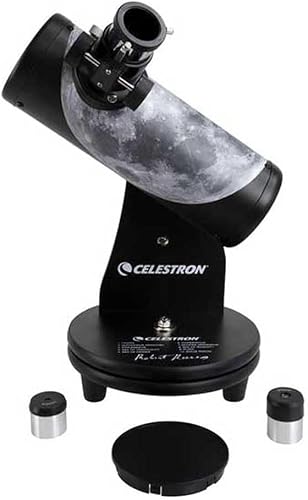
Celestron 22016 Firstscope Robert Reeves Signature Edition 76mm Dobsonian
Telescope

Celestron 22016 Firstscope Robert Reeves Signature Edition 76mm Dobsonian

View on Amazon
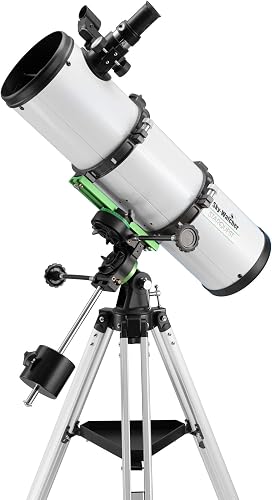
SkyWatcher StarQuest-130P 130mm f/5 Parabolic Newtonian Reflector
Telescope

SkyWatcher StarQuest-130P 130mm f/5 Parabolic Newtonian Reflector

View on Amazon
Celestron UpClose G2 10×50 Porro Binoculars
Binoculars

Celestron UpClose G2 10×50 Porro Binoculars

View on Amazon
Celestron SkyMaster 15×70mm Porro Prism Binoculars
Binoculars

Celestron SkyMaster 15×70mm Porro Prism Binoculars

View on Amazon
Turn Left at Orion
Book

Turn Left at Orion

View on Amazon
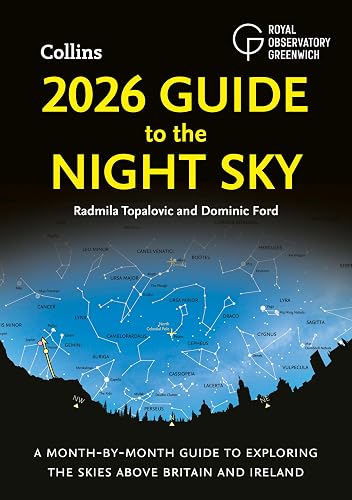
2026 Guide to the Night Sky: Britain and Ireland
Book

2026 Guide to the Night Sky: Britain and Ireland

View on Amazon
Astrophysics for People in a Hurry
Book

Astrophysics for People in a Hurry

View on Amazon
Philip's Planisphere Latitude 51.5 North
Planisphere

Philip's Planisphere Latitude 51.5 North

View on Amazon