Asteroid Tracker

Explainer

What is an asteroid
close approach?

A close approach is when an asteroid passes near Earth. "Close" in astronomical terms can still mean millions of kilometres. Here is how scientists define the term, measure the distances, and decide which objects to monitor.

← Track upcoming approaches

How close is close?

A close approach can mean anything from skimming the satellite ring to passing 19.5 lunar distances out. This scale shows where the landmarks sit.

Earth 100 km 1,000 km 10,000 km 100,000 km 1 million km 10 million km Distance from Earth (logarithmic scale: each step is ten times further) 2020 VT4 - closest recorded miss, ~370 km 2020 VT4 closest recorded miss, ~370 km Apophis, April 2029 - 31,600 km Apophis, April 2029 31,600 km Geostationary satellites - 35,800 km Geostationary satellites 35,800 km The Moon - 384,400 km = 1 LD The Moon 384,400 km = 1 LD PHA distance limit - 7.5 million km = 19.5 LD PHA distance limit 7.5 million km = 19.5 LD

The definition

NASA defines a close approach as any pass within 0.05 AU of Earth's orbit. One AU (astronomical unit) is the average Earth-Sun distance - 150 million km. So 0.05 AU works out to about 7.5 million km, which sounds large until you consider that the nearest star is 40 trillion km away.

For context, 7.5 million km is roughly 19.5 lunar distances (LD). One LD is 384,400 km - the average gap between Earth and the Moon. Most objects in the close-approach database pass at between 1 and 15 LD. A handful come within 1 LD, roughly the Moon's distance.

How the distances are measured

Astronomers use three units when discussing close-approach distances, each suited to different scales:

Lunar distance (LD)

384,400 km

The average Earth-Moon gap. Used for near passes where the Moon is a useful yardstick.

Kilometre (km)

1 km

Used for mission planning and exceptionally close passes - the 2023 BU flyby at 3,600 km above the surface, for example.

Astronomical unit (AU)

150,000,000 km

Used for orbital comparisons and defining the outer edge of the close-approach catalogue.

This tracker shows distances in lunar distances because LD gives an intuitive sense of scale. An asteroid at 2 LD is twice as far as the Moon. At 0.5 LD it is half as far.

How NASA monitors close approaches

When a new asteroid is discovered, observers measure its position on multiple nights. Those positions feed into orbit-determination software at NASA's Center for Near Earth Object Studies (CNEOS) at the Jet Propulsion Laboratory. The software fits a curve through the observations and projects the trajectory forward.

Early predictions can carry large uncertainties - the orbital solution improves with each additional observation. For well-studied objects, close-approach distances are known to within a few thousand kilometres. For newly discovered objects with only a few nights of data, the uncertainty can span millions of kilometres.

Objects coming within 0.05 AU and larger than 140 metres in diameter are classified as potentially hazardous asteroids (PHAs) - not because they will hit Earth, but because they warrant sustained attention. CNEOS maintains impact probability tables for all PHAs. Currently, none have a meaningful probability of impact in the next 100 years.

The bottom line

A close approach does not mean an asteroid is heading for Earth. It means an asteroid's orbital path brings it within a defined distance of Earth's orbit - often millions of kilometres away. No currently tracked object is on a collision course with Earth.

Related pages

Common questions

What does "close approach" mean in astronomy?
A close approach is when an asteroid or comet passes near Earth. NASA formally records an approach when the object comes within 0.05 AU of Earth's orbit - about 7.5 million km. One AU (astronomical unit) is the average distance between Earth and the Sun, approximately 150 million km. In everyday terms, 7.5 million km is still nineteen and a half times the distance to the Moon.
How is the distance of a close approach measured?
Scientists express close-approach distances in several units depending on context. Lunar distances (LD) are common for near-Earth passes - one LD is 384,400 km, the average Earth-Moon distance. Astronomical units (AU) are used for orbital comparisons at larger scales. Raw kilometres appear in mission planning and public reporting.
What is a lunar distance?
A lunar distance (LD) is the average distance from Earth to the Moon - 384,400 km. Astronomers use it as a convenient yardstick for close approaches. An asteroid at 1 LD is as far away as the Moon. At 0.5 LD it is half that. Most close approaches on this tracker sit between 1 and 20 LD.
What is an astronomical unit?
An astronomical unit (AU) is the average distance between Earth and the Sun - approximately 150 million km. Planetary scientists use it to describe orbital sizes and the proximity of near-Earth objects to Earth's orbit. The threshold for a potentially hazardous asteroid (PHA) is 0.05 AU from Earth's orbit, which equals about 7.5 million km or 19.5 lunar distances.
Does Earth's gravity affect an asteroid during a close approach?
Yes. A close approach is not a simple straight-line pass. Earth's gravity bends the asteroid's trajectory slightly. For most approaches at several lunar distances, the effect is small. For passes under 0.01 AU, the gravitational pull can measurably alter the asteroid's future orbit. Scientists account for this in every calculation.
Can a close approach become an impact on a later orbit?
Close approaches at short range can change an asteroid's orbit enough that a future pass becomes more or less likely to intersect Earth's orbit. This is called a keyhole - a narrow region of space that, if the asteroid passes through it, sets up a potential impact on a later encounter. NASA tracks known keyholes for any asteroid with a non-negligible risk. Currently, no known object has a significant impact probability in the next 100 years.
Sean Barraclough

Sean Barraclough

Creator of closeapproach.space

Recommended stargazing gear

Full guide →

This section contains affiliate links. As an Amazon Associate I earn from qualifying purchases.

Celestron 21023 Cometron 76mm Firstscope
Telescope

Celestron 21023 Cometron 76mm Firstscope

View on Amazon
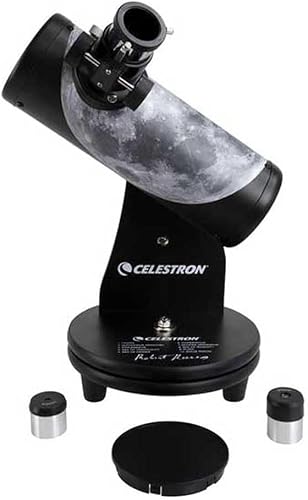
Celestron 22016 Firstscope Robert Reeves Signature Edition 76mm Dobsonian
Telescope

Celestron 22016 Firstscope Robert Reeves Signature Edition 76mm Dobsonian

View on Amazon
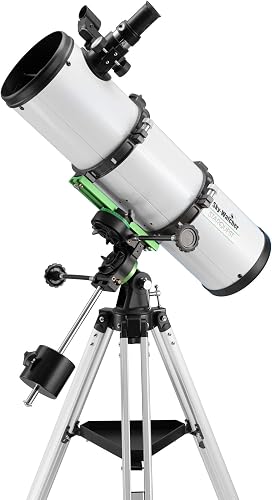
SkyWatcher StarQuest-130P 130mm f/5 Parabolic Newtonian Reflector
Telescope

SkyWatcher StarQuest-130P 130mm f/5 Parabolic Newtonian Reflector

View on Amazon
Celestron UpClose G2 10×50 Porro Binoculars
Binoculars

Celestron UpClose G2 10×50 Porro Binoculars

View on Amazon
Celestron SkyMaster 15×70mm Porro Prism Binoculars
Binoculars

Celestron SkyMaster 15×70mm Porro Prism Binoculars

View on Amazon
Turn Left at Orion
Book

Turn Left at Orion

View on Amazon
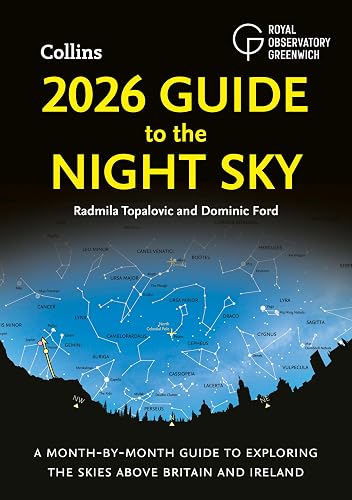
2026 Guide to the Night Sky: Britain and Ireland
Book

2026 Guide to the Night Sky: Britain and Ireland

View on Amazon
Astrophysics for People in a Hurry
Book

Astrophysics for People in a Hurry

View on Amazon
Philip's Planisphere Latitude 51.5 North
Planisphere

Philip's Planisphere Latitude 51.5 North

View on Amazon