Asteroid Tracker

Size Reference

How big are
near-Earth asteroids?

Asteroid size spans an enormous range - from pebbles to objects larger than cities. The size of an asteroid determines whether it burns up harmlessly in the atmosphere or poses a genuine risk to the surface below.

See the largest known NEOs →

Size classes and what they mean

Each size class has a characteristic effect on Earth - determined by how much kinetic energy survives to the surface.

< 25 m ≈ Double-decker bus (11 m long)

Burns up in atmosphere. Fragments may reach ground. No significant surface impact.

Examples: 2023 BU (4–8 m), Chelyabinsk object (~20 m)

25–140 m ≈ Football pitch (105 m long)

Can reach the surface or cause major airburst. Local to regional damage.

Examples: Tunguska object (~50–80 m)

140 m – 1 km ≈ The Shard, London (310 m tall)

Potentially hazardous. Regional to continental damage on impact.

Examples: Apophis (~370 m), Bennu (~490 m)

1–5 km ≈ Ben Nevis, Scotland (1,345 m)

Continental to global effects. Potential climate disruption.

Examples: 4179 Toutatis (~4.5 km)

> 5 km ≈ Mount Everest (8,849 m)

Global catastrophe. Mass extinction risk.

Examples: Chicxulub impactor (~10–15 km, 66 Ma ago)

Relative scale (logarithmic)

Car
5 m
Double-decker bus
11 m
Football pitch
105 m
Chelyabinsk (2013)
20 m
Tunguska object
65 m
The Shard
310 m
Apophis
370 m
Ben Nevis
1.3 km
Mount Everest
8.8 km
Chicxulub
12.0 km

Scale is logarithmic. Grey bars = landmarks. Blue bars = asteroids/events.

Well-known near-Earth asteroids by size

A selection of named objects, from the largest to the most closely watched.

Asteroid Diameter PHA
1036 Ganymed ~37.7 km No
433 Eros ~34.4 km No
3552 Don Quixote ~19 km No
4179 Toutatis ~4.5 km No
101955 Bennu ~490 m Yes
99942 Apophis ~370 m Yes
25143 Itokawa ~535 m No
162173 Ryugu ~900 m No

Why size matters

Impact energy scales with the cube of diameter - double the diameter, and the released energy increases eightfold. A 50-metre asteroid carries roughly 500 times more kinetic energy than a 10-metre one, even at the same speed.

This is why NASA's planetary defence threshold sits at 140 metres. Below that size, the atmosphere absorbs enough energy during entry that ground-level effects are limited. Above it, surface impacts produce enough energy to cause widespread regional destruction. At 1 kilometre and above, the effects become global.

Related pages

Common questions

How big are near-Earth asteroids?
Near-Earth asteroids range across many orders of magnitude. The smallest tracked objects are a few metres across - roughly the size of a car. The largest known near-Earth asteroid, 1036 Ganymed, is about 37 km in diameter, larger than Greater London. Most of the asteroids in NASA's close-approach catalogue are small - under 50 metres - because survey telescopes are now sensitive enough to detect them.
What is the smallest asteroid that can cause damage on the ground?
Objects smaller than about 25 metres typically disintegrate in the atmosphere before reaching the surface. The 2013 Chelyabinsk event involved an object roughly 20 metres across that exploded at altitude and never reached the ground intact - yet its shockwave still broke windows and injured around 1,500 people. Objects in the 25-50 metre range can produce partial penetration to the ground in denser material. Above 50 metres, the risk of surface damage rises significantly.
How big was the asteroid that killed the dinosaurs?
The Chicxulub impactor that caused the Cretaceous-Paleogene extinction event 66 million years ago is estimated at between 10 and 15 kilometres across. For comparison, that is roughly the height of Mount Everest (8.8 km) plus a few kilometres. The impact released energy equivalent to billions of nuclear weapons and triggered global climate effects that lasted years. NASA has catalogued more than 95% of near-Earth objects at this scale. None are on a collision trajectory.
How big is the largest known near-Earth asteroid?
1036 Ganymed is the largest known near-Earth asteroid, with a diameter of approximately 37.7 km. It is an Amor-class asteroid, meaning its orbit does not currently cross Earth's orbit. The second largest is 433 Eros at about 34.4 km - a peanut-shaped object visited by NASA's NEAR Shoemaker spacecraft in 2001. Neither poses an impact risk.
How do scientists estimate asteroid size?
Several methods are used. The simplest is apparent brightness combined with an assumed reflectivity (albedo). Darker asteroids reflect less light so must be larger to appear equally bright. Thermal infrared measurements - which detect the heat an asteroid radiates - give more reliable size estimates regardless of surface colour. Radar observations provide the most precise measurements, resolving shape and rotation as well as size. For asteroids visited by spacecraft, direct imaging gives exact dimensions.
Sean Barraclough

Sean Barraclough

Creator of closeapproach.space

Recommended stargazing gear

Full guide →

This section contains affiliate links. As an Amazon Associate I earn from qualifying purchases.

Celestron 21023 Cometron 76mm Firstscope
Telescope

Celestron 21023 Cometron 76mm Firstscope

View on Amazon
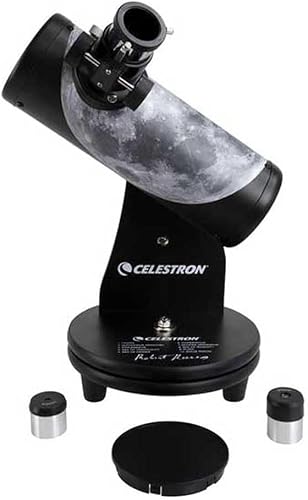
Celestron 22016 Firstscope Robert Reeves Signature Edition 76mm Dobsonian
Telescope

Celestron 22016 Firstscope Robert Reeves Signature Edition 76mm Dobsonian

View on Amazon
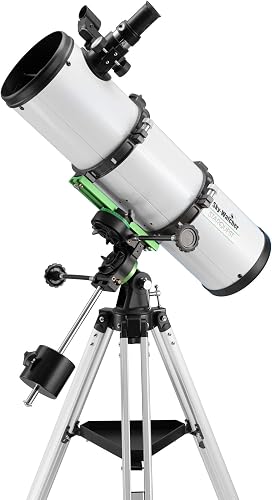
SkyWatcher StarQuest-130P 130mm f/5 Parabolic Newtonian Reflector
Telescope

SkyWatcher StarQuest-130P 130mm f/5 Parabolic Newtonian Reflector

View on Amazon
Celestron UpClose G2 10×50 Porro Binoculars
Binoculars

Celestron UpClose G2 10×50 Porro Binoculars

View on Amazon
Celestron SkyMaster 15×70mm Porro Prism Binoculars
Binoculars

Celestron SkyMaster 15×70mm Porro Prism Binoculars

View on Amazon
Turn Left at Orion
Book

Turn Left at Orion

View on Amazon
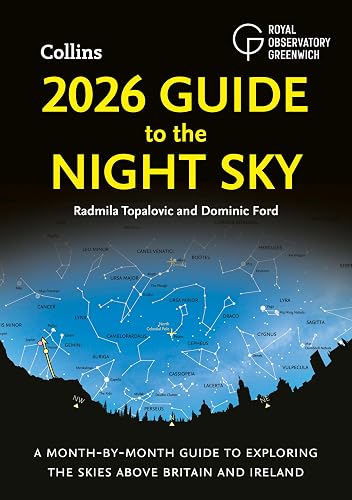
2026 Guide to the Night Sky: Britain and Ireland
Book

2026 Guide to the Night Sky: Britain and Ireland

View on Amazon
Astrophysics for People in a Hurry
Book

Astrophysics for People in a Hurry

View on Amazon
Philip's Planisphere Latitude 51.5 North
Planisphere

Philip's Planisphere Latitude 51.5 North

View on Amazon