Asteroid Tracker

3D solar system asteroid map

Every asteroid below is a real object passing within 0.05 AU of Earth in the next 60 days, plotted on its true orbit from NASA JPL data. Drag to rotate, scroll to zoom, and click any point for the close approach details.

Loading...

Near-Earth asteroid

Potentially hazardous

Comet

Loading live asteroid data...

Upcoming close approaches

Every asteroid currently plotted on the map, in date order. Click a row to see it in 3D. The list refreshes daily from JPL's close approach data.

Common questions

What do the distances in this 3D map mean?
Orbital distances are to scale. One astronomical unit (AU), the average Earth-Sun distance of about 150 million km, is a fixed length in the scene, so the spacing between orbits is astronomically accurate. Planet and asteroid sizes are not to scale - at true scale every body would be an invisible speck, so the spheres are enlarged for visibility while keeping a loose sense of relative size.
Why do some asteroid paths appear to pass through Earth?
Because the planets are drawn far larger than life. Orbits and asteroid positions are to scale, but at true scale Earth would be an invisible speck, so the map inflates it roughly 700 times. That oversized sphere covers about 11 lunar distances of real space, which means the accurate path of an asteroid missing us by a few lunar distances can appear to cross the drawn planet. The pass is still a miss. For an honest view of a close pass, follow Earth and switch to the Moon close-up, which shrinks Earth back towards its true size and shows the Moon's orbit to scale. The true-scale planets toggle in the legend shows the same thing for the whole solar system.
How often does the asteroid data update?
The close approach list and orbital elements come from NASA JPL's Small-Body Database and are refreshed once every 24 hours. Orbital elements barely change day-to-day, so a daily refresh keeps positions accurate without hammering the JPL servers. The map shows near-Earth asteroids approaching within 0.05 AU of Earth over the next 60 days.
What does "potentially hazardous" mean?
A potentially hazardous asteroid (PHA) is one larger than roughly 140 metres whose orbit comes within 0.05 AU of Earth's orbit. The label reflects size and orbital proximity, not a predicted impact. None of the objects on this map are on a collision course with Earth. PHAs are marked in orange so you can spot them at a glance.
What do the asteroid sizes represent?
Each asteroid's diameter range is estimated from its brightness. Astronomers measure an object's absolute magnitude, then convert it to a size range by assuming how reflective the surface might be - a dark asteroid must be larger than a bright one to reflect the same light. Where a directly measured diameter exists, the panel shows that single figure instead.
How accurate are the orbits and positions shown?
Positions are computed from real Keplerian orbital elements published by JPL - semi-major axis, eccentricity, inclination, argument of perihelion, longitude of ascending node and mean anomaly. The map propagates each orbit as a two-body problem, which is accurate to well within a pixel at this scale over the 60-day window. JPL's own ephemerides add planetary perturbations, which matter for precise predictions but not for visualisation.

Embed this map

Teachers, bloggers and space enthusiasts are welcome to embed the live map on their own site, free of charge. Copy the snippet below; the corner badge links back here.

<iframe src="https://closeapproach.space/embed/asteroid-map" width="100%" height="600" style="border:0;border-radius:12px" loading="lazy" title="3D solar system asteroid map"></iframe>

Related pages

Sean Barraclough

Sean Barraclough

Creator of closeapproach.space

Recommended stargazing gear

Full guide →

This section contains affiliate links. As an Amazon Associate I earn from qualifying purchases.

Celestron 21023 Cometron 76mm Firstscope
Telescope

Celestron 21023 Cometron 76mm Firstscope

View on Amazon
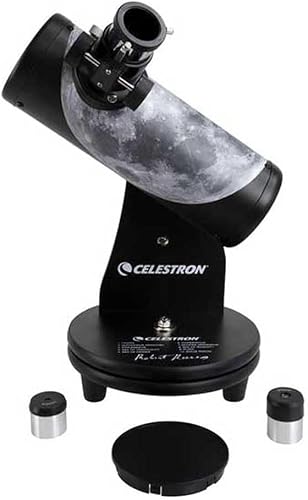
Celestron 22016 Firstscope Robert Reeves Signature Edition 76mm Dobsonian
Telescope

Celestron 22016 Firstscope Robert Reeves Signature Edition 76mm Dobsonian

View on Amazon
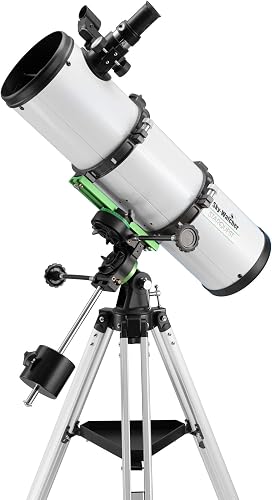
SkyWatcher StarQuest-130P 130mm f/5 Parabolic Newtonian Reflector
Telescope

SkyWatcher StarQuest-130P 130mm f/5 Parabolic Newtonian Reflector

View on Amazon
Celestron UpClose G2 10×50 Porro Binoculars
Binoculars

Celestron UpClose G2 10×50 Porro Binoculars

View on Amazon
Celestron SkyMaster 15×70mm Porro Prism Binoculars
Binoculars

Celestron SkyMaster 15×70mm Porro Prism Binoculars

View on Amazon
Turn Left at Orion
Book

Turn Left at Orion

View on Amazon
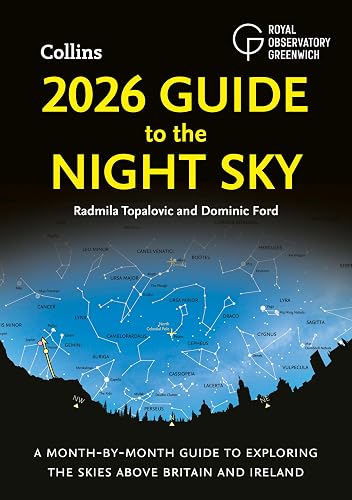
2026 Guide to the Night Sky: Britain and Ireland
Book

2026 Guide to the Night Sky: Britain and Ireland

View on Amazon
Astrophysics for People in a Hurry
Book

Astrophysics for People in a Hurry

View on Amazon
Philip's Planisphere Latitude 51.5 North
Planisphere

Philip's Planisphere Latitude 51.5 North

View on Amazon