Asteroid Tracker
← Back to dashboard

Near-Earth Object

893859 (2016 VO1

NASA ID: 20893859

Safe

893859 (2016 VO1 will pass Earth on 14 February 2027 at a distance of 3.69 lunar distances (LD) - about 1,417,234 km - travelling at 49,386 km/h. Its estimated diameter is between 63 and 140 metres, roughly the size of a football pitch (around 105 m long). NASA does not classify it as potentially hazardous.

Close Approach Date

14 February 2027

In 239 days

Miss Distance

3.69 LD

1,417,234 km

Moon PHA limit

4 times the Moon's distance from Earth

Velocity

49,386 km/h

ISS

1.8 times the orbital speed of the International Space Station

Est. Diameter

63–140 m

Absolute Magnitude

H = 23.14

The brightness measure astronomers use to estimate size

Hazard Classification

Not Hazardous

The real orbit in 3D

The actual path of 893859 (2016 VO1 around the Sun, computed from JPL orbital elements. Drag to rotate, scroll to zoom, and use the time controls to run the orbit forwards or back.

Every recorded pass

Each dot is one close approach of 893859 (2016 VO1 to Earth between 1906 and 2096, from JPL's records. Lower means closer: a dot under the dashed line passed nearer than the Moon. The orange dot is the approach on this page.

1900 1950 2000 2050 2100 1 LDMoon's orbit 10 LD today 10 Oct 1906 - 17.23 LD15 Feb 1916 - 30.45 LD10 Feb 1917 - 34.65 LD12 Oct 1941 - 14.08 LD15 Feb 1952 - 14.11 LD13 Oct 1978 - 16.87 LD13 Feb 1990 - 13.31 LD10 Oct 2016 - 24.07 LD14 Feb 2027 - 3.69 LD (this approach)12 Oct 2051 - 15.54 LD14 Feb 2061 - 3.19 LD14 Oct 2085 - 26.01 LD16 Feb 2096 - 13.27 LD Close approach date Miss distance (LD, log scale)

Size Comparison

Asteroid 63–140 m Football pitch 105 m long

Reading the Numbers

  • A lunar distance (LD) is the average gap between Earth and the Moon, about 384,400 km. It is the standard yardstick for close approaches. Read more →
  • Diameter estimates come from brightness. A dark surface reflects less light than a bright one, so the true size can sit anywhere in the quoted range. Read more →
  • Potentially hazardous is a watch-list label based on size and orbital proximity. It does not mean an impact is expected. Read more →

Recommended stargazing gear

Full guide →

This section contains affiliate links. As an Amazon Associate I earn from qualifying purchases.

Celestron 21023 Cometron 76mm Firstscope
Telescope

Celestron 21023 Cometron 76mm Firstscope

View on Amazon
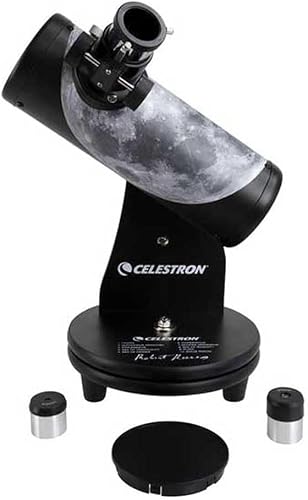
Celestron 22016 Firstscope Robert Reeves Signature Edition 76mm Dobsonian
Telescope

Celestron 22016 Firstscope Robert Reeves Signature Edition 76mm Dobsonian

View on Amazon
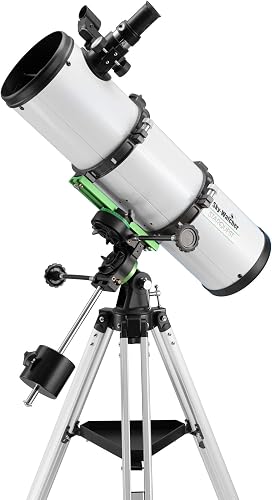
SkyWatcher StarQuest-130P 130mm f/5 Parabolic Newtonian Reflector
Telescope

SkyWatcher StarQuest-130P 130mm f/5 Parabolic Newtonian Reflector

View on Amazon
Celestron UpClose G2 10×50 Porro Binoculars
Binoculars

Celestron UpClose G2 10×50 Porro Binoculars

View on Amazon
Celestron SkyMaster 15×70mm Porro Prism Binoculars
Binoculars

Celestron SkyMaster 15×70mm Porro Prism Binoculars

View on Amazon
Turn Left at Orion
Book

Turn Left at Orion

View on Amazon
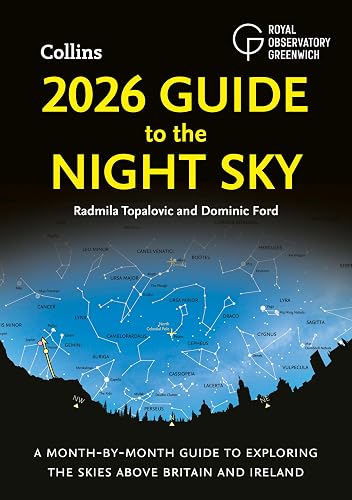
2026 Guide to the Night Sky: Britain and Ireland
Book

2026 Guide to the Night Sky: Britain and Ireland

View on Amazon
Astrophysics for People in a Hurry
Book

Astrophysics for People in a Hurry

View on Amazon
Philip's Planisphere Latitude 51.5 North
Planisphere

Philip's Planisphere Latitude 51.5 North

View on Amazon