Asteroid Tracker

Detection

How NASA discovers
near-Earth asteroids

Survey telescopes photograph the sky repeatedly. Algorithms spot objects that move between frames. Mathematicians compute where those objects are going. Here is the full pipeline from first detection to published orbit.

How planetary defence uses that data →

The detection method

The fundamental technique has not changed since the first automated surveys in the 1990s, though the hardware and software have improved enormously. A wide-field telescope photographs the same region of sky several times over the course of a night. Software subtracts the images from each other, leaving only the things that changed between frames. Moving objects - asteroids, comets - appear as small dots that shift position. Stars and galaxies, which are effectively stationary, cancel out.

Candidates from this automated scan are reviewed - some by software filters, some by human eyes - to remove false detections such as cosmic rays, satellite trails, and imaging artefacts. Genuine asteroid candidates are then observed again the same night or on subsequent nights to confirm the motion and collect enough data for a preliminary orbit.

One complication is the direction of the Sun. Objects approaching from the sunward side are invisible to ground-based telescopes until they pass Earth - which is why the 2013 Chelyabinsk object was not detected beforehand. Space-based infrared telescopes in specific orbits, such as the planned NEO Surveyor, are designed to close this blind spot.

The main survey programmes

Survey Note
Catalina Sky Survey Consistently leads annual NEO discovery counts
Pan-STARRS Exceptionally wide field of view; strong on faint objects
ATLAS Designed for short-warning detection; full-sky every 24 hours
Spacewatch Pioneer of automated asteroid surveys, operating since 1980s
NEOWISE (decommissioned) Infrared detection regardless of albedo. Deactivated August 2024.
NEO Surveyor (planned) Dedicated planetary defence telescope; will detect sun-approaching objects

From detection to orbit

Each confirmed new detection is reported to the Minor Planet Center (MPC) at the Smithsonian Astrophysical Observatory. The MPC assigns a provisional designation, coordinates global follow-up observations, and publishes the data openly. With enough positional measurements - typically four or more spanning several hours or nights - the MPC can compute a preliminary orbit.

NASA's Center for Near Earth Object Studies (CNEOS) at the Jet Propulsion Laboratory takes the orbital solution and assesses whether the object qualifies as a NEO. If it does, CNEOS runs impact probability calculations using Monte Carlo methods - propagating a cloud of possible orbits forward in time and counting how many pass through Earth.

Any non-zero impact probability is published immediately on the Sentry risk table. Follow-up observations narrow the orbit. In most cases, the impact probability drops to zero within days or weeks as the refined orbit shows Earth is not in the path.

What is coming next

The Vera C. Rubin Observatory in Chile, currently in commissioning, will conduct the Legacy Survey of Space and Time (LSST) - repeatedly photographing the entire visible southern sky every few nights. It is expected to discover hundreds of thousands of new solar system objects within a few years of operation, including a substantial fraction of the remaining undiscovered NEOs in the 100-metre-plus size range.

NEO Surveyor, a NASA infrared space telescope in development, is specifically designed for planetary defence. Operating in an orbit that allows it to look toward the Sun, it will detect objects that are invisible to ground-based surveys - particularly inbound asteroids on the day side.

Related pages

Common questions

How does NASA find new asteroids?
Ground-based survey telescopes photograph the same patch of sky several times in one night. Software compares the frames and flags any point of light that has moved - stationary objects are stars or galaxies; moving ones are solar system bodies. Each candidate is verified by follow-up observations, then reported to the Minor Planet Center, which assigns a provisional designation. Orbit-determination software then computes the trajectory and assesses whether the object qualifies as a near-Earth object (NEO).
What telescopes does NASA use to find near-Earth asteroids?
NASA funds several ground-based survey programmes. Catalina Sky Survey operates from the Catalina Mountains in Arizona and consistently leads annual discovery counts. Pan-STARRS operates from Haleakala in Hawaii using a 1.8-metre telescope with a wide field of view. ATLAS (Asteroid Terrestrial-impact Last Alert System) runs from multiple sites globally and is designed to find objects that could arrive with short warning. The Spacewatch survey at Kitt Peak also contributes. In space, the WISE/NEOWISE mission made infrared observations until its deactivation in 2024.
How long does it take from discovery to orbit calculation?
Initial orbit calculations can be made within hours of discovery from a handful of observations. These early orbits carry large uncertainties. Over the following days and weeks, as additional observations come in, the orbit is refined. For most objects, a reliable orbit is established within a few weeks. For high-priority objects - particularly those with initial non-zero impact probabilities - the process is accelerated and coordinated globally.
What is the Minor Planet Center?
The Minor Planet Center (MPC) is an internationally recognised clearinghouse for solar system small-body observations, operated at the Smithsonian Astrophysical Observatory in Cambridge, Massachusetts. It receives observations from hundreds of observatories worldwide, assigns provisional designations to new objects, computes preliminary orbits, and publishes data accessible to scientists and the public. Every asteroid, comet, and minor planet discovery passes through the MPC before being officially recognised.
How many new near-Earth asteroids are discovered each year?
The annual discovery rate has grown substantially as survey capabilities have improved. Hundreds of new near-Earth objects are discovered each month. In peak years, the count has exceeded 3,000 new NEO discoveries in a single year. The growth reflects better telescope sensitivity and wider sky coverage rather than a real increase in the asteroid population. NASA estimates that more than 95% of NEOs 1 kilometre or larger have been found; the 140-metre-plus category is still being catalogued.
Sean Barraclough

Sean Barraclough

Creator of closeapproach.space

Recommended stargazing gear

Full guide →

This section contains affiliate links. As an Amazon Associate I earn from qualifying purchases.

Celestron 21023 Cometron 76mm Firstscope
Telescope

Celestron 21023 Cometron 76mm Firstscope

View on Amazon
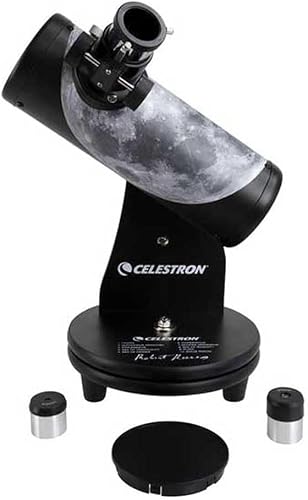
Celestron 22016 Firstscope Robert Reeves Signature Edition 76mm Dobsonian
Telescope

Celestron 22016 Firstscope Robert Reeves Signature Edition 76mm Dobsonian

View on Amazon
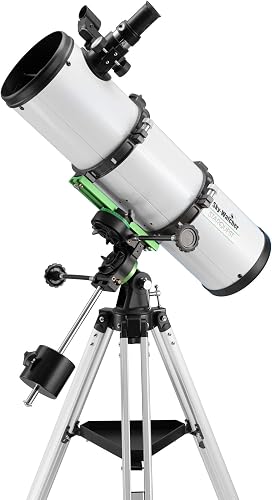
SkyWatcher StarQuest-130P 130mm f/5 Parabolic Newtonian Reflector
Telescope

SkyWatcher StarQuest-130P 130mm f/5 Parabolic Newtonian Reflector

View on Amazon
Celestron UpClose G2 10×50 Porro Binoculars
Binoculars

Celestron UpClose G2 10×50 Porro Binoculars

View on Amazon
Celestron SkyMaster 15×70mm Porro Prism Binoculars
Binoculars

Celestron SkyMaster 15×70mm Porro Prism Binoculars

View on Amazon
Turn Left at Orion
Book

Turn Left at Orion

View on Amazon
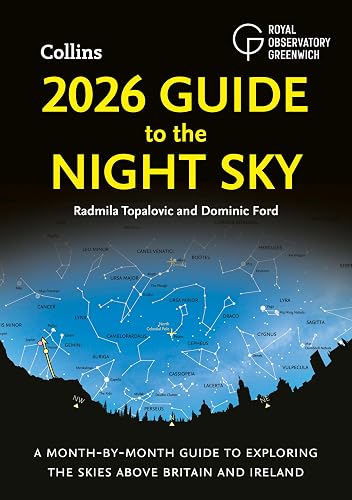
2026 Guide to the Night Sky: Britain and Ireland
Book

2026 Guide to the Night Sky: Britain and Ireland

View on Amazon
Astrophysics for People in a Hurry
Book

Astrophysics for People in a Hurry

View on Amazon
Philip's Planisphere Latitude 51.5 North
Planisphere

Philip's Planisphere Latitude 51.5 North

View on Amazon