April 2029
The Apophis asteroid:
what happens in 2029
On 13 April 2029, a 370-metre asteroid will pass close enough to Earth to be seen with the naked eye. It carries no impact risk. Here is everything the science says about the most anticipated flyby in modern astronomy.
Full Apophis fact file →At a glance - 13 April 2029
Asteroid
99942 Apophis
Diameter
~370 metres
Closest approach (UTC)
~21:46 UTC
Distance from Earth centre
~38,000 km
Distance from surface
~32,000 km
Peak brightness
Magnitude ~3.1 (naked eye)
Best viewing region
Europe, Africa, western Asia
Impact risk
None - confirmed by radar 2021
Why this flyby is significant
Apophis's 2029 pass will be the closest approach by a known asteroid of this size in recorded history. At 370 metres, Apophis is larger than the PHA (potentially hazardous asteroid) classification threshold of 140 metres - meaning an impact from an object of this size would cause widespread regional damage. Knowing that it will miss, by a precise and well-understood margin, is the product of two decades of dedicated observation.
The proximity of the flyby makes it unprecedented for another reason: Earth's gravity will measurably alter Apophis's trajectory. The asteroid will slow slightly as it approaches, gain speed as it recedes, and leave on a subtly different orbital path. Scientists will measure that change with high precision, providing data on how gravitational interactions affect asteroids over time.
For the general public, the event is simply remarkable: a mountain-scale rock visible to the naked eye, moving visibly across the sky over several hours. Nothing like it has been observed in the modern era of planetary science.
Spacecraft and missions
ESA's Ramses (Rapid Apophis Mission for Space Safety) is designed to rendezvous with Apophis several months before the flyby and accompany it through the encounter. The mission will study how Earth's tidal forces reshape the asteroid's regolith - the loose surface material - and monitor any structural changes induced by the gravitational interaction.
Multiple ground-based telescope networks and space observatories will also point at Apophis during the flyby. The data collected in those hours will exceed what most asteroids receive across their entire observational history.
How to observe it
No telescope is required - Apophis will be visible to the naked eye from the best viewing regions. The asteroid will move noticeably against the star background over the course of a few hours, which is itself unusual and striking: stars appear stationary, so a point of light shifting position in real time is an immediate indicator of something close.
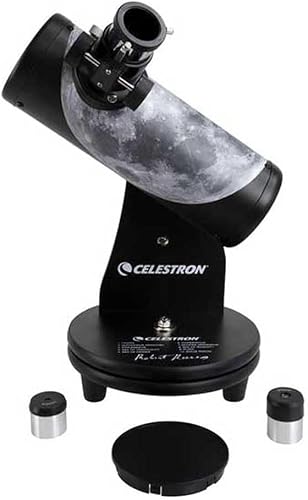
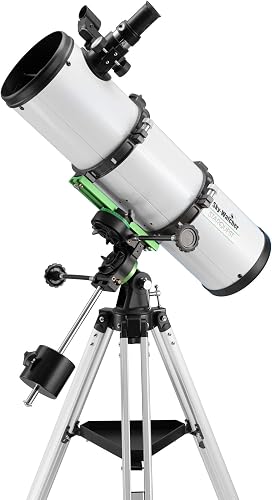
Europe, Africa, and western Asia will have the best conditions during peak brightness. The UK will see it in the evening sky. Binoculars will make the movement easier to track. For those in the Americas or Australasia, online telescope feeds and planetarium projections will be widely available.
The specific sky position will be published by planetarium software and astronomy apps in advance. Searching for Apophis in any major stargazing application in the run-up to April 2029 will show its path.
After the flyby
Earth's gravity will alter Apophis's orbit during the 2029 encounter. The new orbital path will determine how close future passes come. Scientists currently predict near-zero impact probability for the 2036 and 2068 encounters, but those figures will be updated using the high-precision measurements gathered in 2029.
The flyby represents a narrow window in which to gather data that will shape long-term risk assessment. If any residual probability of future impact remains after 2029 observations, it will be characterised with much greater precision than is currently possible.
Related pages
Apophis full fact file
Discovery, history, risk assessment, and missions.
Famous historical flybys
Context for how significant the 2029 event really is.
Planetary defence
How the systems that found and tracked Apophis work.
Danger rating scales
How Apophis reached Torino 4 - and how it was resolved.