Asteroid Tracker

Historical Record

Famous asteroid
close approaches

A timeline of the asteroid events that shaped modern planetary science - from the 1908 Tunguska airburst to the record-breaking 2023 BU flyby and the approaching Apophis encounter of 2029.

Apophis - the 2029 flyby →

Timeline of notable events

1908 Tunguska Impact

Largest recorded impact in modern history. Flattened ~2,000 km² of Siberian forest.

Size: 50–80 m · Distance: Atmospheric entry (airburst ~10 km altitude)

2004 Apophis discovered Discovery

Initial observations suggested a 2.7% chance of impact in 2029 - the first asteroid to reach Torino Scale 4.

Size: ~370 m · Distance: Not applicable

2004 2004 FH Flyby

First asteroid discovered and tracked before passing inside geostationary orbit altitude.

Size: ~30 m · Distance: ~43,000 km from surface

2008 2008 TC3 Predicted impact

First asteroid predicted to hit Earth before impact. Meteorite fragments recovered from Nubian Desert.

Size: ~4 m · Distance: Struck atmosphere over Sudan

2013 Chelyabinsk Impact

Shockwave injured ~1,500 people. Arrived from the direction of the Sun - undetected beforehand.

Size: ~20 m · Distance: Atmospheric airburst ~30 km altitude

2017 2012 TC4 Flyby + exercise

Used as a live planetary defence exercise by NASA and ESA to test response procedures.

Size: ~17 m · Distance: ~44,000 km from surface

2020 2020 VT4 Flyby

Passed below low-Earth orbit. Discovered only after the flyby.

Size: ~5 m · Distance: ~370 km from surface

2022 DART / Dimorphos Deliberate impact

First demonstration of asteroid deflection. Changed Dimorphos orbit period by 33 minutes.

Size: N/A (mission) · Distance: Impact on Dimorphos at Didymos system

2023 2023 BU Flyby

Closest confirmed non-impacting pass by a known asteroid on record.

Size: 4–8 m · Distance: ~3,600 km from surface

2029 Apophis flyby Flyby (predicted)

Closest predicted pass by a known large asteroid in recorded history. Visible to naked eye.

Size: ~370 m · Distance: ~38,000 km from Earth centre

What these events have in common

Each event on this timeline advanced the field in some way - either by demonstrating what happens when an asteroid reaches the ground, by setting a proximity record, or by driving improvements in detection and response systems.

Tunguska and Chelyabinsk showed that even sub-140-metre objects can cause significant damage - Chelyabinsk in particular because it arrived undetected from the Sun's direction. That event directly accelerated investment in ATLAS and other short-warning survey networks.

The DART mission in 2022 shifted planetary defence from theoretical planning to a proven engineering capability. The success of that impact changes the risk calculus significantly: large objects found years ahead can now be deflected.

The 2029 Apophis flyby is not just a spectacle. It will provide the most detailed data set ever collected on a near-Earth asteroid from Earth, and will test the limits of orbital prediction at close range.

Related pages

Common questions

What is the most famous asteroid close approach in history?
The 2029 Apophis flyby is the most anticipated in modern history - a 370-metre asteroid visible to the naked eye, passing at roughly 38,000 km from Earth's centre. For historical significance, the 1908 Tunguska event is the most consequential recorded impact, though it was not a close approach but an actual airburst. In the close-approach category, asteroid 2023 BU in January 2023 set a record for the nearest confirmed non-impacting pass at about 3,600 km from the surface.
When was the closest asteroid flyby on record?
Asteroid 2023 BU holds the confirmed record at approximately 3,600 km above Earth's surface on 26 January 2023. This was closer than the altitude of low-Earth orbit operational satellites. The object was 4-8 metres across and was discovered only five days before the flyby. Smaller objects almost certainly pass closer without being detected.
What happened at Tunguska?
On 30 June 1908, a rocky object estimated at 50-80 metres across entered the atmosphere over the Podkamennaya Tunguska River region of Siberia and exploded at around 8-10 km altitude. The airburst released energy estimated at 10-15 megatons of TNT, flattening approximately 2,000 km² of forest. The event left no crater because the object disintegrated before reaching the ground. Due to the remote location, no human deaths were confirmed from the impact itself.
What happened at Chelyabinsk in 2013?
On 15 February 2013, an object roughly 20 metres across entered the atmosphere over Chelyabinsk, Russia at approximately 67,000 km/h. It exploded at around 30 km altitude, releasing energy estimated at 500 kilotons of TNT. The shockwave broke windows across a wide area and sent around 1,500 people to hospital - mostly with cuts from flying glass. The event was not predicted: the object was approaching from the direction of the Sun, which made ground-based detection difficult.
What upcoming asteroid events are most significant?
The Apophis flyby on 13 April 2029 is the most significant near-term event. A 370-metre asteroid will pass roughly 38,000 km from Earth's centre - visible to the naked eye over Europe, Africa, and Asia. Multiple space agencies plan spacecraft observations during the flyby. No other known object of similar size approaches Earth this closely in the next century.
Sean Barraclough

Sean Barraclough

Creator of closeapproach.space

Recommended stargazing gear

Full guide →

This section contains affiliate links. As an Amazon Associate I earn from qualifying purchases.

Celestron 21023 Cometron 76mm Firstscope
Telescope

Celestron 21023 Cometron 76mm Firstscope

View on Amazon
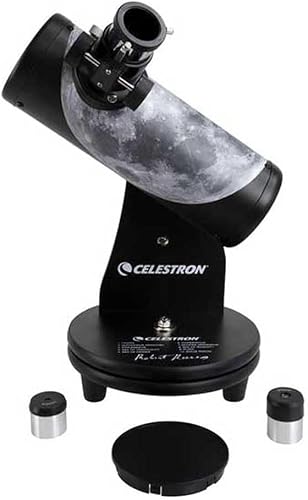
Celestron 22016 Firstscope Robert Reeves Signature Edition 76mm Dobsonian
Telescope

Celestron 22016 Firstscope Robert Reeves Signature Edition 76mm Dobsonian

View on Amazon
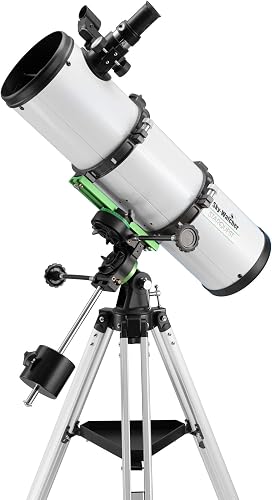
SkyWatcher StarQuest-130P 130mm f/5 Parabolic Newtonian Reflector
Telescope

SkyWatcher StarQuest-130P 130mm f/5 Parabolic Newtonian Reflector

View on Amazon
Celestron UpClose G2 10×50 Porro Binoculars
Binoculars

Celestron UpClose G2 10×50 Porro Binoculars

View on Amazon
Celestron SkyMaster 15×70mm Porro Prism Binoculars
Binoculars

Celestron SkyMaster 15×70mm Porro Prism Binoculars

View on Amazon
Turn Left at Orion
Book

Turn Left at Orion

View on Amazon
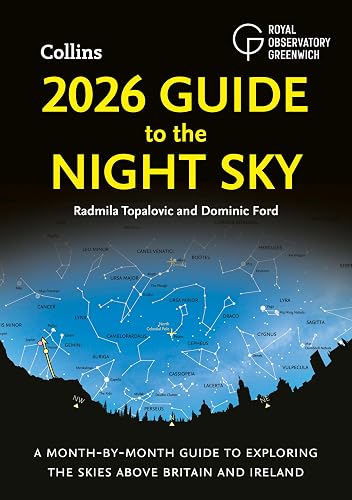
2026 Guide to the Night Sky: Britain and Ireland
Book

2026 Guide to the Night Sky: Britain and Ireland

View on Amazon
Astrophysics for People in a Hurry
Book

Astrophysics for People in a Hurry

View on Amazon
Philip's Planisphere Latitude 51.5 North
Planisphere

Philip's Planisphere Latitude 51.5 North

View on Amazon